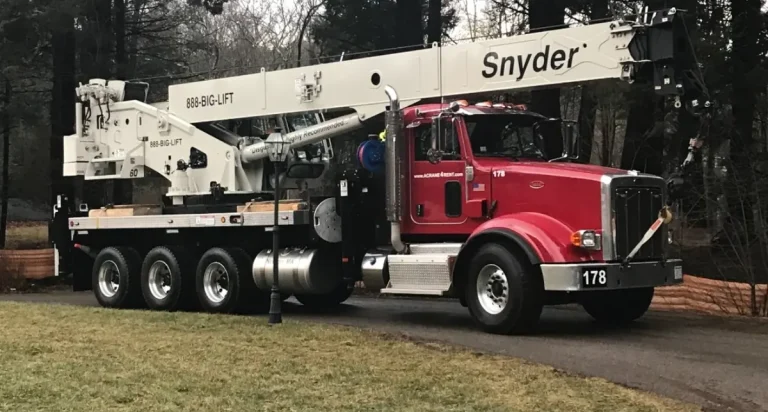
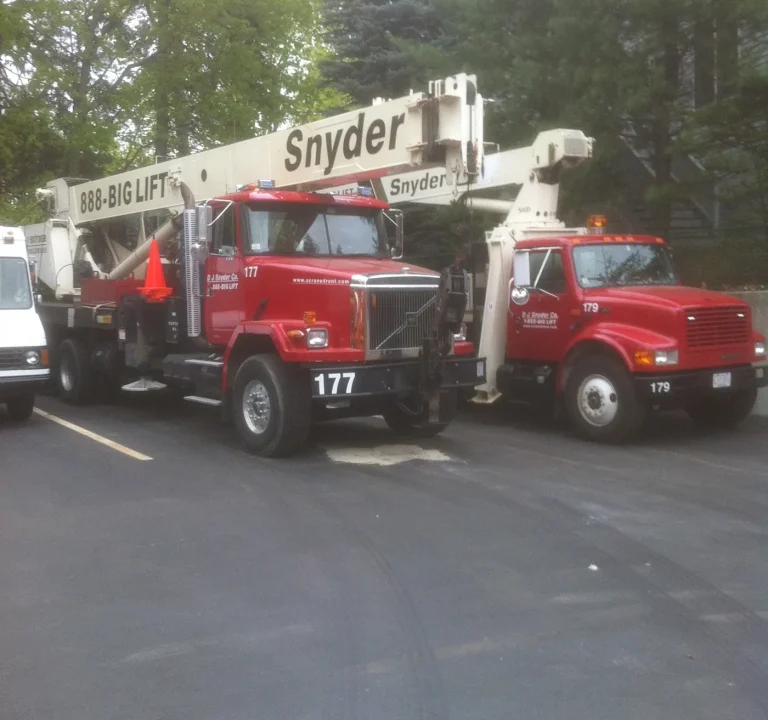
A large flat roof may need snow removal when heavy, wet snow or ice builds up after a big storm, or when snow drifts pile up against walls and rooftop units. Warning signs include sagging ceilings, new cracks, doors that stick and creaking sounds. Crane-assisted snow removal lifts the snow off the roof by the bucketload, which takes the weight off much faster than shoveling it over the edge.
New England winters can put a lot of weight on commercial roofs in a short time. Here is how to tell when a roof needs help, and how a crane makes the job faster and safer.
Why snow weight matters
Not all snow is the same. Light, fluffy snow weighs much less than wet, heavy snow, and ice weighs even more. Rain on top of snow soaks in and makes it heavier still. A roof that handled two feet of powder last month may be in trouble with less snow that is wet and packed.
Where snow piles up
- Against higher walls, where the roof steps down.
- Around rooftop units, parapets and other structures.
- In low spots and near drains that have frozen.
- Where snow slides off a higher roof onto a lower one.
These drifts can put much more weight on one part of the roof than the rest.
Warning signs your roof is under stress
- Sagging ceilings or roof deck.
- New cracks in walls or ceilings.
- Doors or windows inside that suddenly stick.
- Creaking, popping or cracking sounds.
- Sprinkler heads that have dropped below the ceiling.
- New leaks.
If you see these signs, get people out of the building and call a professional. Do not go on the roof yourself.
Dave’s tip
Don’t wait until the roof shows signs of stress. After a big storm, and before more snow or rain is coming, is the time to call.
How crane snow removal works
On a large flat roof, shoveling snow over the edge is slow, and it can be dangerous for the crew and anyone below. With a crane, the snow is loaded into a large bucket on the roof, and the crane lifts it off and sets it down on the ground or in a truck. It takes the weight off the roof quickly and keeps the snow away from doors, walkways and parked cars.
- Fast, even on very large roofs.
- Snow lands where you want it, not on sidewalks or cars.
- Less foot traffic over the building’s edges.
- Works well where trucks can’t get close to the walls.
Plan before winter
The best time to plan for roof snow removal is before the first storm. Big storms bring a rush of calls, so having a plan in place helps you get help faster.
- Know the size of your roof and where the drains are.
- Know where a crane can set up near the building.
- Mark skylights, vents and anything that could be hidden under the snow.
- Have a contact who can let the crew in, day or night.
Safety first
Roof snow removal is risky work. Crews need fall protection, and hidden skylights and roof openings are a real danger under snow. Leave it to a trained crew with the right equipment.
Frequently Asked Questions
How much snow is too much for a flat roof?
It depends on the roof design and the type of snow. Wet, heavy snow and ice are much more dangerous than light snow. If you are not sure, have the building checked by an engineer or a roofing professional.
Can a crane remove snow from any roof?
Crane snow removal works best on large commercial roofs where the crane can set up close to the building. We look at the site and tell you if it is a good fit.
How fast can you respond after a storm?
We respond as quickly as we can, and customers who plan ahead with us are easier to get to. Call us before winter to set up a plan.
Where does the snow go?
The crane sets the snow down where you choose, on a part of the lot away from doors and walkways, or into trucks to be hauled away.
Have a large flat roof? Request a free quote to plan ahead, or learn more about our roof snow removal service.