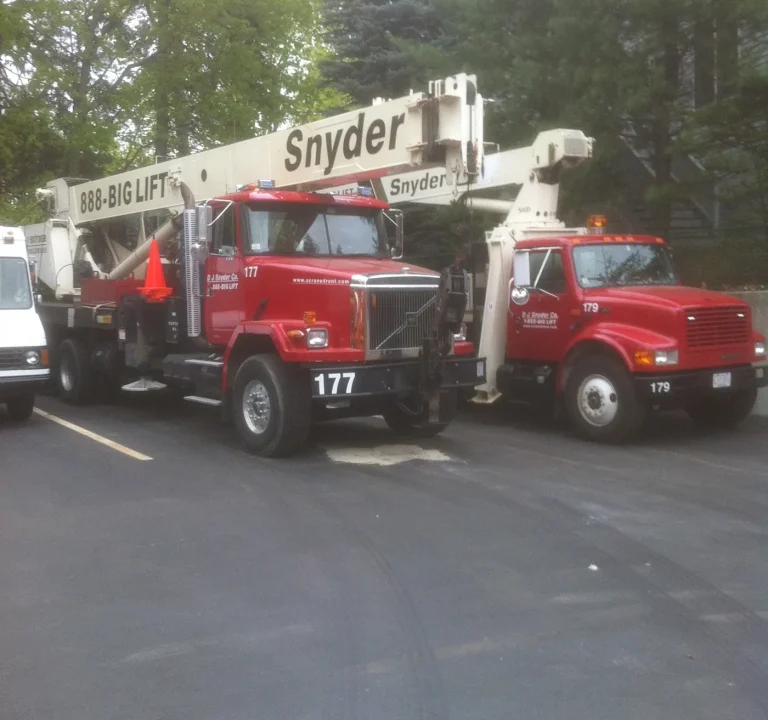
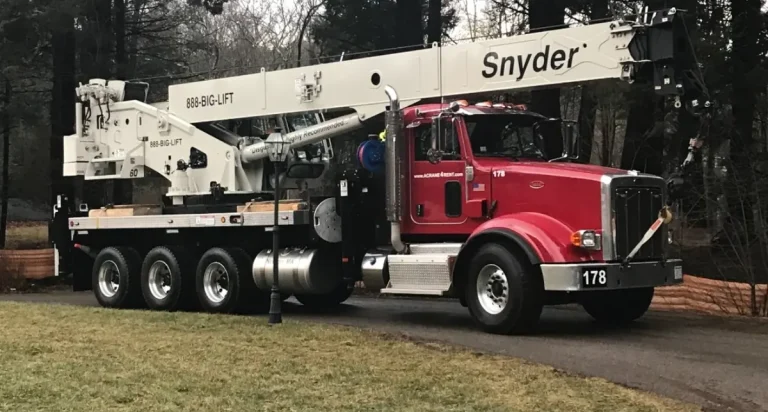
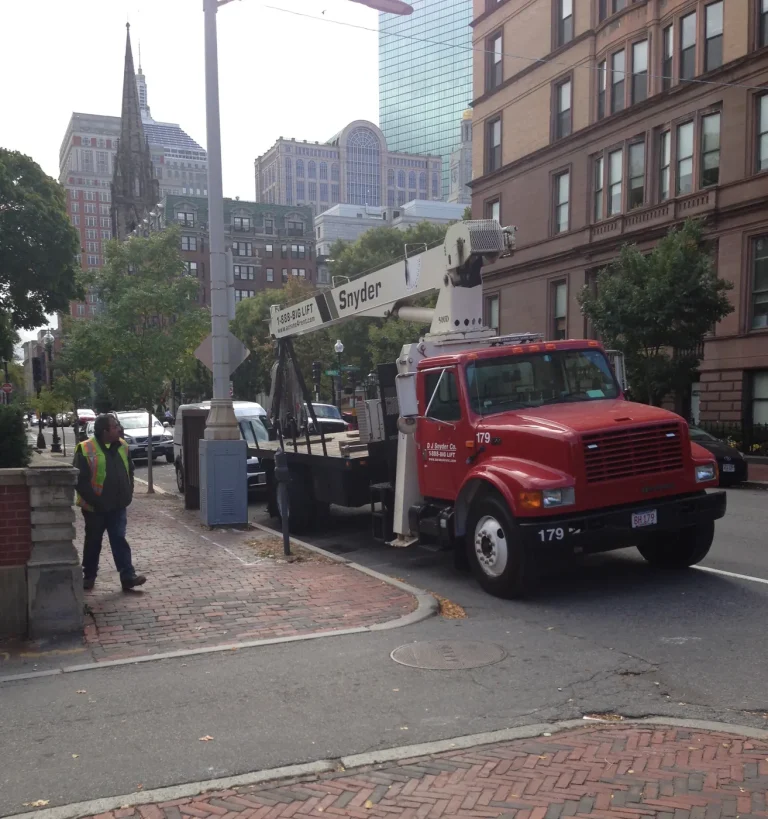
To plan a rooftop HVAC crane lift, you need the unit weight, the roof height, how far the unit has to travel from where the crane can set up, and a ready landing spot like a finished curb or rails. Send those details and photos to the crane company early, line up any permits, and have your HVAC crew on the roof when the crane arrives. Most single-unit lifts go quickly when everything is ready.
We lift rooftop units for commercial and residential buildings all over Greater Boston. Here is how a typical lift goes, and the steps that keep it on schedule.
Before lift day
Get the unit specs
Send the spec sheet with the unit’s weight and size. Include the curb adapter or any extra pieces going up at the same time. Old units coming down count too, so send their weight if you have it.
Know the distances
How far is the curb from the edge of the roof, and from where the crane can park? How high is the roof? These numbers decide the size of the crane. See What Size Crane Do I Need? for why reach matters so much.
Check the setup area
The crane needs firm, level ground and space for its outriggers. Parking lots, loading docks and driveways usually work well. Tell us about soft ground, underground tanks, or anything else under the pavement.
Line up permits
If the crane has to set up on a city street, you may need a street occupancy permit and a police detail. Read Do You Need a Permit for a Crane in Boston?.
Lift day checklist
- The curb or rails are installed and ready.
- The old unit is disconnected if it is coming out.
- Your HVAC crew is on the roof, ready to guide the unit.
- Cars are moved out of the setup and swing area.
- Lifting points on the unit are known, and any rigging is ready.
- Someone is on site who can make decisions.
Dave’s tip
Schedule the crane for when your crew is fully ready, not when you hope they will be. Waiting time is the biggest added cost on HVAC lifts.
How the lift goes
- The crane arrives, sets up its outriggers and levels out.
- The rigging is attached to the unit’s lifting points.
- The crane lifts the unit and swings it over the building.
- A signal person guides the operator while the unit is lowered.
- Your crew guides it onto the curb, and the crane sets it down.
- The rigging comes off, and the crane packs up or moves to the next unit.
We lift the unit over the building and set it right where your HVAC crew needs it, so they can get straight to work.
Safety on HVAC lifts
Nobody stands under a suspended load. The swing area is kept clear of people and cars. Power lines nearby change where the crane sets up, because OSHA requires cranes to stay well clear of energized lines. Wind can also stop a lift, since large flat units catch the wind like a sail. We watch the forecast and will tell you early if the weather could be a problem.
Several units, one day
If you have more than one building or several units, plan them together. One crane visit for many units costs much less than several visits. Tell us the full list when you ask for a quote.
Frequently Asked Questions
How much does a rooftop unit weigh?
It depends on the size and type. Many rooftop units weigh from several hundred pounds to several tons. The manufacturer’s spec sheet has the exact weight.
Can you lift HVAC units onto a house?
Yes. We lift units for both commercial and residential buildings, including over the house to a back roof or yard.
Can you remove the old unit too?
Yes. We can lift the old unit off and set the new one in the same visit. Send us the weight of both.
What happens if it is too windy?
Large units catch the wind, so high winds can stop a lift for safety. We check the forecast and will reschedule with you if needed.
Have a rooftop unit to set? Request a free quote or learn more about our HVAC placement service.