To plan a crane lift, start with five things: what you are lifting and its weight, where it has to go, where the crane can set up, anything in the way like power lines, and the date and time. Send those details with photos to the crane company. With that information, they can pick the right crane, spot problems early and give you an accurate quote.
This is the same checklist we use on every job, from a single rooftop unit to a full day of job site lifts. Go through it before you call and lift day will go much more smoothly.
1. The load
- What is being lifted?
- How much does it weigh? A spec sheet or bill of lading is best.
- How big is it, and where are the lifting points?
- How many pieces, and how many separate lifts?
- Is anything coming down too, like an old unit?
2. Where it has to go
- Where is the landing spot: a roof, a floor, a foundation, a backyard?
- How high is it?
- How far is it from where the crane can park?
- Is the landing spot ready, and strong enough for the load?
3. The setup area
- Where can the crane park? Street, driveway, lot or yard?
- Is the ground firm and level?
- Are there septic systems, tanks, drains or utilities underneath?
- Is there room for the outriggers to spread out?
- Can a large truck get in, around corners and under any overhangs?
Dave’s tip
Walk the path from the street to the setup spot and look up. Low wires, branches and overhangs are easy to miss from the ground.
4. Things in the way
- Power lines near the setup area or along the path of the load.
- Trees, buildings and signs.
- Traffic, parked cars and people walking by.
- Nearby airports, for tall cranes.
Power lines are the biggest danger on any lift. OSHA requires cranes to stay well clear of energized lines, and sometimes the utility company needs to cover or turn off a line first. That can take time, so call early.
5. Permits and traffic
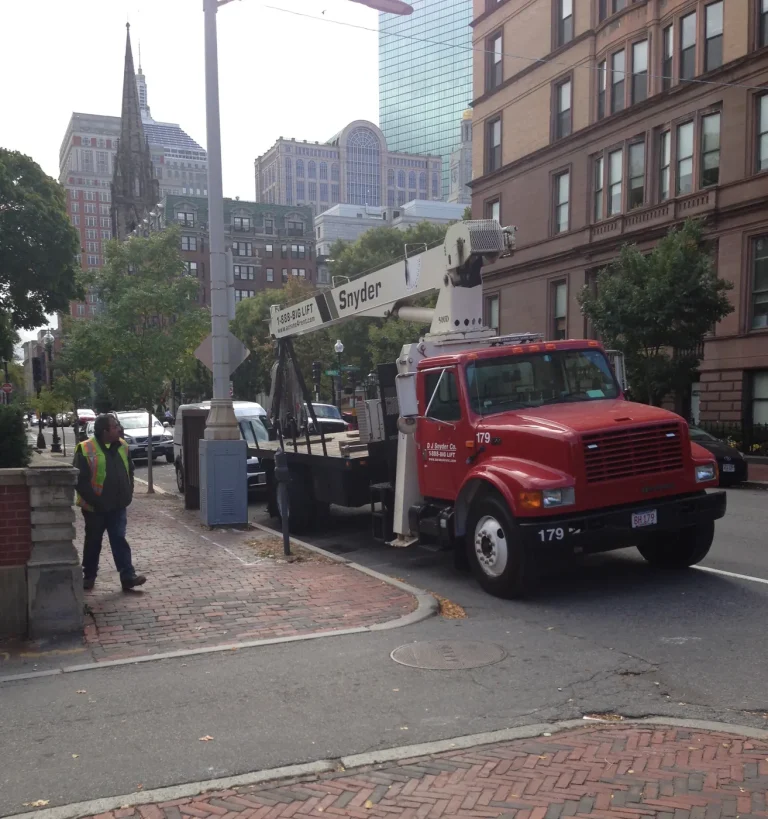
If the crane sets up on a public street or sidewalk, you will likely need a city permit, and in many places a police detail. In Boston, apply at least 7 business days ahead. Read Do You Need a Permit for a Crane in Boston?.
6. The schedule
- What date and time window works?
- Does the city limit when the street can be blocked?
- Will your crew be ready when the crane arrives?
- Is there a backup date if the weather does not cooperate?
7. Safety on lift day
- One person is chosen to give signals to the operator.
- The swing area is roped off and kept clear.
- Nobody stands under the load.
- Everyone knows the plan before the first pick.
- The lift stops if the wind picks up or anything changes.
Send it all with your quote request
The more of this list you can answer, the faster and more accurate your quote will be. Photos of the setup area and the landing spot help most. If you can’t answer everything, that is fine. We can visit the site and work it out with you.
Not sure which crane fits? Start with What Size Crane Do I Need?. Curious about cost? See what affects the price of a crane.
Frequently Asked Questions
How far ahead should I book a crane?
As early as you can, especially in busy seasons or if you need a city permit. A week or two ahead is common for simple lifts. Permit jobs need more time.
Does the crane company do a site visit?
For many jobs, photos are enough. For tight sites, heavy loads or complex lifts, we visit the site first.
Who is in charge on lift day?
The crane operator has the final say on whether a lift is safe. The customer and the crane crew agree on the plan, and one signal person directs the lift.
What happens if the weather is bad?
High winds, lightning and ice can stop a lift. We watch the forecast and will talk with you early about a backup date.
Have your list ready? Request a free quote and we will plan the lift with you. See all our crane services.