The right size crane depends on three things: how heavy the load is, how far and how high it has to go, and where the crane can set up. Weight alone is not enough. A crane that can easily lift a load close in may not be able to lift the same load at a long reach, so the distance matters as much as the weight.
This is the most common question we get, and the answer is different for every job. Here is how we work it out, and what you can send us to get the right crane the first time.
1. The weight of the load
Start with the weight of the item itself. Then add the weight of the rigging, like slings, shackles and spreader bars, because the crane lifts all of it. If you have a spec sheet for the unit or the material, send it with your quote request. Guessing at the weight is the fastest way to end up with the wrong crane.
2. How far and how high it has to go
Every crane has a load chart. It shows how much the crane can lift at each boom length and distance. The farther the load is from the center of the crane, the less it can lift. Going higher means a longer boom, which also lowers the capacity.
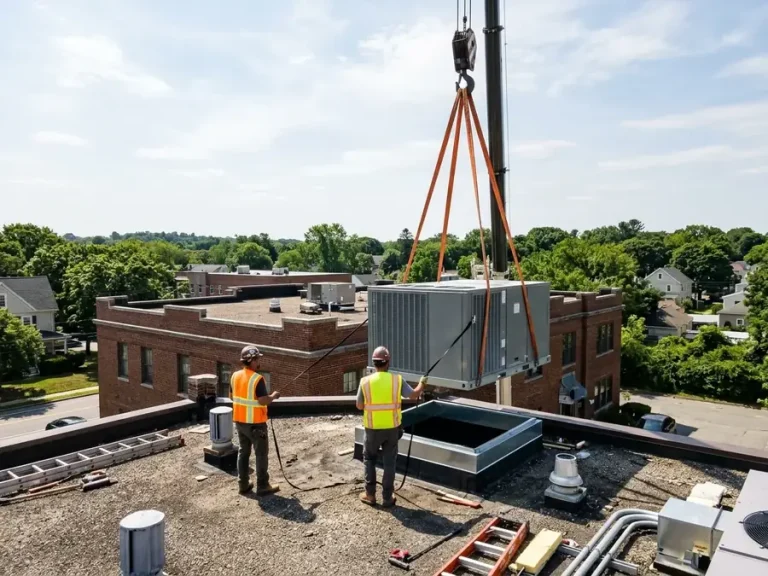
So the real question is not “how heavy,” but “how heavy, how far and how high.” A small unit that has to go over a building and land in the middle of a roof can need a much bigger crane than a heavy one set right next to the truck.
- How far is the landing spot from where the crane can park?
- How high is the roof or landing spot?
- Does the load have to go over a building, trees or wires?
- Will the crane have to swing the load around anything?
Dave’s tip
A few photos of the setup area and the landing spot help us pick the right crane the first time. A wide shot of the street and a close shot of the landing spot are perfect.
3. Where the crane can set up
A truck crane needs firm, level ground and room to spread its outriggers. Soft lawns, slopes, buried tanks and septic systems all matter. On tight city streets, the setup spot often decides the size of the crane more than anything else.
4. Things in the way
Power lines are the biggest one. OSHA requires cranes to stay well clear of energized lines, which can change where the crane sets up and how long the boom has to be. Trees, buildings and traffic also play a part.
Our crane sizes
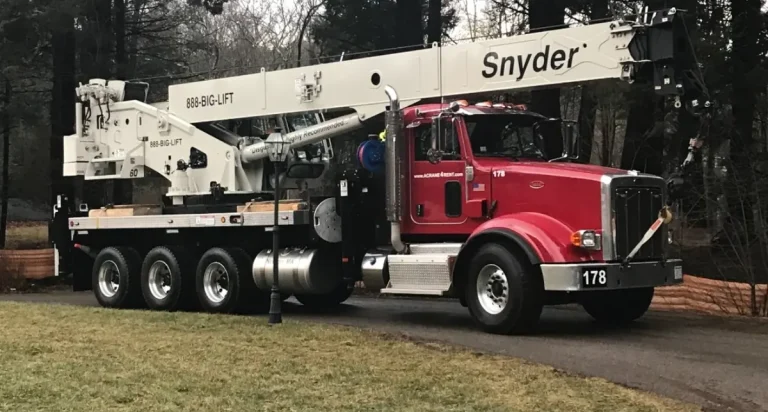
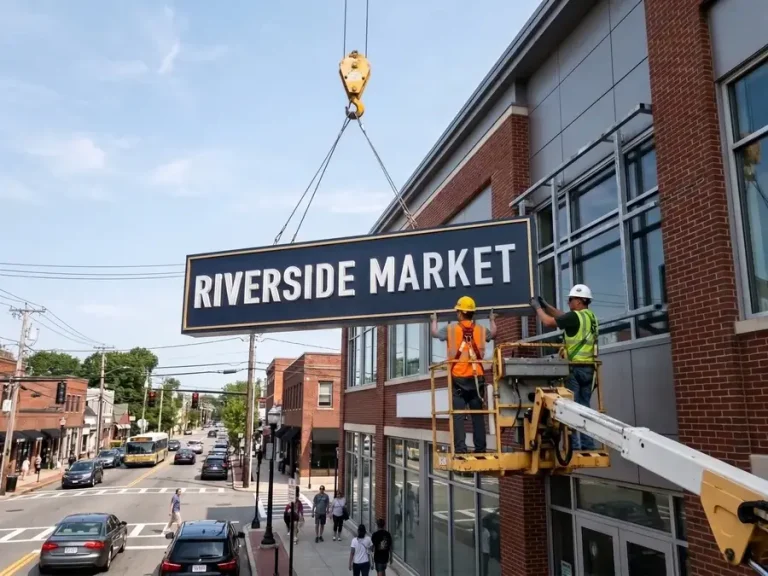
Our fleet of conventional and hydraulic truck cranes ranges from 12 to 70 tons, with tip heights up to about 10 stories. That lets us match the machine to the job instead of sending one size for everything. We handle job site lifts, rooftop HVAC placement, sign installation and roof snow removal.
What to send us for a quote
- The address of the job.
- What you need lifted and its weight, or a spec sheet.
- Where it has to go, and how high.
- Photos of the setup area and the landing spot.
- The date you need it done, and any time limits.
For the full list we use, see How to Plan a Crane Lift: The Checklist We Use.
Frequently Asked Questions
What size crane do I need for a rooftop HVAC unit?
It depends on the unit weight, the roof height and how far the crane has to reach. Send us the unit spec sheet and a photo of the setup area and we will match the crane.
What does a 70-ton crane mean?
The ton rating is the most the crane can lift under ideal conditions, very close in. At a longer reach it can lift much less. That is why reach and height matter so much.
Can you tell me the crane size over the phone?
Often we can give you a good idea. For an exact answer we need the weight, the distances and photos, or a quick site visit.
Have a lift coming up? Request a free quote and we will match the right crane to the job.